Please note that some of the links on this website are affiliate links. I will earn a commission if you decide to make a purchase after clicking through the link. As an Amazon Associate I earn from qualifying purchases.
Emmer Farrotto with Mushrooms: A Winter Grain Dish Built for Depth and Comfort
Best Chef Recipes — Winter Cooking & Ancient Grains Series
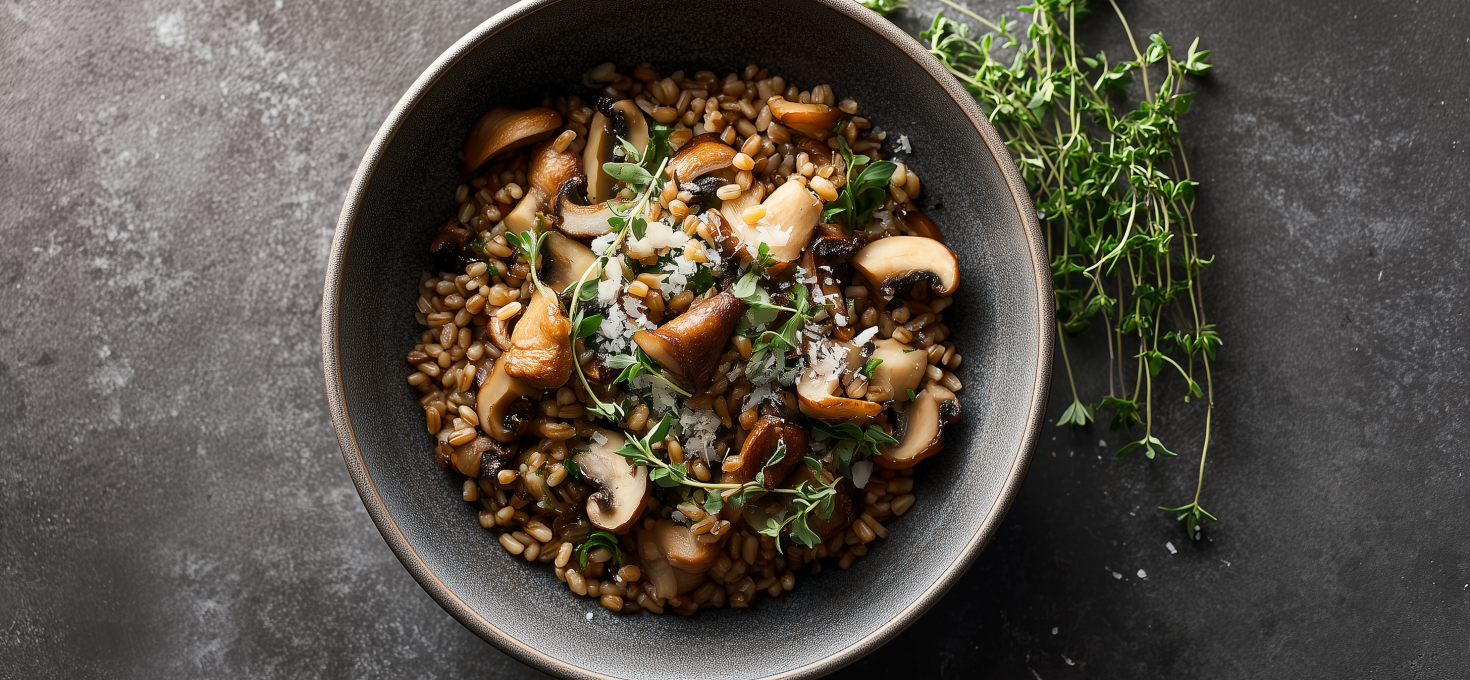
Farrotto is the ancient-grain counterpart to risotto—less delicate, more grounded, and perfectly suited to winter cooking. Made with emmer wheat (Triticum dicoccum), this dish trades the creaminess of arborio rice for a deeper, nutty chew that absorbs flavor without losing structure.
This version, built around mushrooms and stock, is a quiet winter staple: warming, adaptable, and deeply satisfying without being heavy. It’s the kind of dish chefs cook at home—simple ingredients, careful technique, and no unnecessary extras.
🧪 Why Emmer Works So Well for Farrotto
Emmer is one of the oldest cultivated grains on earth. Unlike modern wheat or rice, it retains a firm outer structure that allows it to simmer slowly without breaking down. This makes it ideal for risotto-style cooking, where gradual liquid absorption is key.
- Holds texture through long cooking
- Absorbs stock deeply
- Provides natural nuttiness and body
- More forgiving than rice
Chef’s note: Use semi-pearled emmer (farro medio) for best results. Whole emmer works but requires soaking and longer cooking.
🍄 Ingredient Notes
Mushrooms provide umami and earthiness that pair naturally with emmer’s warm grain flavor. Use what’s available—this recipe is flexible by design.
- Cremini or button mushrooms for everyday cooking
- Chanterelles, hedgehogs, or oysters for a PNW seasonal upgrade
- Dried mushrooms (rehydrated) can be added for depth
🍽 Emmer Farrotto with Mushrooms (Serves 4)
Ingredients
- 1 cup semi-pearled emmer (farro medio)
- 3–4 cups vegetable or chicken stock, kept warm
- 2 tbsp olive oil
- 1 tbsp butter (optional)
- 1 small onion or shallot, finely diced
- 2 cloves garlic, minced
- 8 oz mushrooms, sliced or torn
- ½ cup dry white wine
- Fresh thyme or rosemary
- Salt and black pepper
- Grated pecorino or aged cheese (optional)
Method
- Heat olive oil (and butter if using) in a wide pan over medium heat.
- Add onion and cook gently until translucent, not browned.
- Add garlic and mushrooms. Cook until mushrooms release moisture and begin to brown.
- Add emmer and toast for 1–2 minutes, stirring to coat the grains.
- Deglaze with white wine and reduce until nearly dry.
- Add warm stock one ladle at a time, stirring occasionally.
- Allow liquid to absorb before adding more. Continue for 20–30 minutes.
- When emmer is tender but still chewy, season with salt, pepper, and herbs.
- Finish with cheese if desired and rest for 2–3 minutes before serving.
🧠 Texture & Flavor Adjustments
- For creamier texture: stir more frequently and finish with butter or cheese
- For lighter texture: stir less and stop just shy of full absorption
- For deeper umami: add a splash of mushroom soaking liquid or miso
🌿 Seasonal Variations
- Winter: mushrooms, leeks, kale, thyme
- Early spring: asparagus tips, lemon, soft herbs
- Autumn: roasted squash, sage, browned butter
❄️ Why This Dish Belongs in Winter Cooking
Winter cooking is about depth rather than brightness. Emmer farrotto delivers warmth, chew, and sustained satisfaction without relying on richness alone. It pairs naturally with greens, roasted vegetables, or simple proteins, making it a foundational winter recipe rather than a special-occasion dish.
This is not a restaurant plate—it’s a seasonal technique worth keeping.