Please note that some of the links on this website are affiliate links. I will earn a commission if you decide to make a purchase after clicking through the link. As an Amazon Associate I earn from qualifying purchases.
Red Russian: The Tender, Sweet, Oakleaf Kale of Winter
Best Chef Recipes — Pacific Northwest Ingredient Series
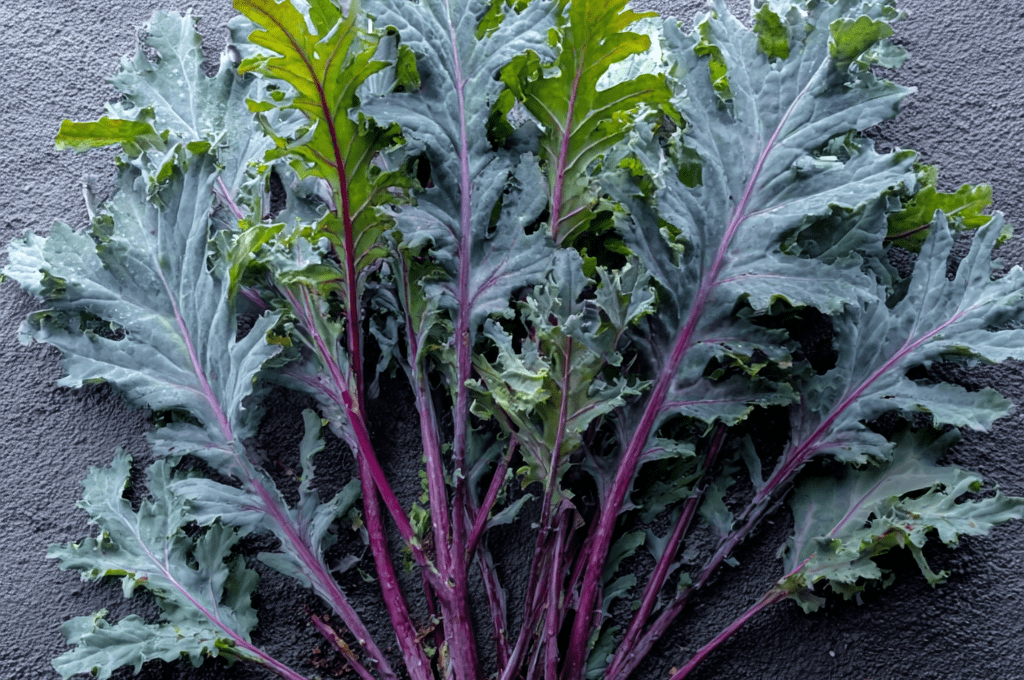
Red Russian kale is one of the most beloved winter kales for chefs and growers across the Pacific Northwest. Unlike most curl-leaf kales in the Brassica oleracea family, Red Russian belongs to Brassica napus—a lineage that gives it uniquely tender leaves, rapid frost sweetening, and exceptional raw-eating quality. With its soft oakleaf structure and purple stems, it stands apart as a winter green designed for salads, fermentation, and quick cooking.
Its ability to thrive through frost, rain, and short winter daylight makes it a cornerstone of the PNW winter garden. For chefs, its mild flavor and fast-softening texture open doors to applications where traditional curly kale feels too tough or heavy. For growers, its reliability and continuous harvest make it indispensable.
🌱 Flavor, Texture & Botanical Identity
Red Russian has a mild, sweet character that becomes more pronounced as temperatures fall. Frost triggers the conversion of stored starches into natural sugars, reducing bitterness and giving the leaves a noticeably clean finish.
| Feature | Description |
|---|---|
| Texture | Soft oakleaf shape; tender raw; fast to cook |
| Sweetness | High after frost; subtle grassy sweetness raw |
| Bitterness | Very low; approachable for all diners |
| Color | Blue-green leaves with purple stems and veins |
| Aroma | Mild brassica with earthy undertones |
Chef Tip: Red Russian is exceptional when used raw—massage lightly with lemon or vinegar to soften and brighten its flavor.
🍽 Best Culinary Applications
Red Russian’s soft structure and winter sweetness make it ideal for raw and short-cooked preparations. It excels in recipes where curly kale might feel too firm or require blanching.
| Technique | Culinary Benefit |
|---|---|
| Raw salads | Leaf softens quickly; absorbs dressing beautifully |
| Fermentation | Perfect for kimchi and kraut; mild flavor integrates well |
| Quick sautés | Tender within moments; retains light crunch in stems |
| Soup finishing | Wilts evenly without turning tough |
| Baby leaf mixes | Sought after for winter salad blends |
Flavor Pairings: citrus, tahini, toasted hazelnuts, miso, garlic, chili crisp, roasted squash, apple cider vinegar, pancetta, parmesan.
🌿 Growing Red Russian in the Pacific Northwest
Red Russian is tailored for maritime winters. It tolerates wet soils, short daylight, frost, and recurrent cold snaps—often producing year-round with minimal protection.
Soil & Climate Performance
| Condition | Recommendation |
|---|---|
| Botanical | Brassica napus |
| Soil pH | 6.2–7.0 |
| Organic matter | Medium to high; creates tender growth |
| Cold tolerance | Outstanding; thrives in repeated freezes |
| Best season | Fall and winter harvest |
Grower Note: Leaves harvested directly after frost are significantly sweeter and more tender.
Planting & Harvest Strategy
Red Russian can be harvested at every stage—from baby leaves to large mature blades.
| Stage | Best For |
|---|---|
| Baby leaf | Premium salad mixes; delicate flavor |
| Mid-size | Raw salads; quick sautés |
| Mature leaves | Soups, fermentation, sautés |
Chef’s Harvest Guide: 4–7 inch leaves for salads; 8–12 inch leaves for cooking or fermenting.
❄️ Frost Response & Biochemical Advantage
Red Russian’s unique chemistry gives it superior winter flavor. As part of the napus group, it exhibits a rutabaga-like reaction to cold: