Please note that some of the links on this website are affiliate links. I will earn a commission if you decide to make a purchase after clicking through the link. As an Amazon Associate I earn from qualifying purchases.
Toscano Black Palm: Long-Leaf Tuscan Kale
Best Chef Recipes — Pacific Northwest Ingredient Series
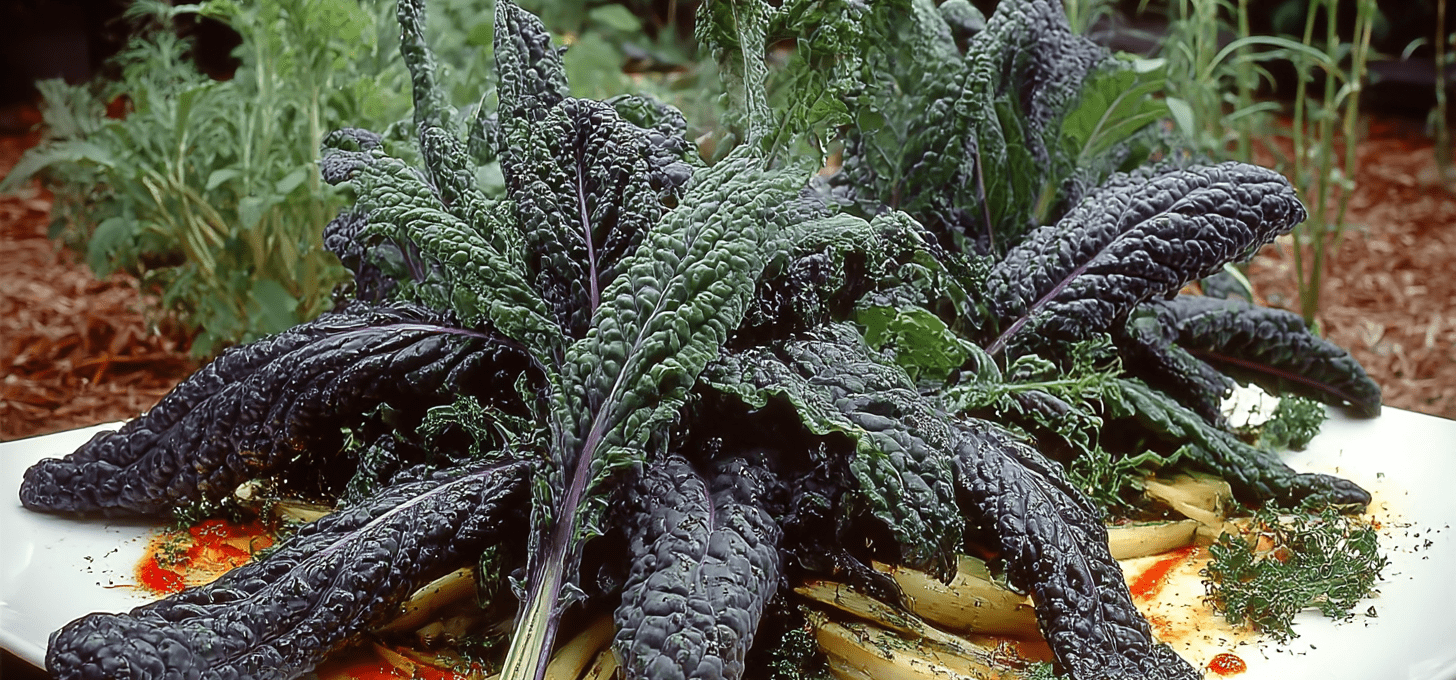
Toscano Black Palm is a rare long-leaf Tuscan kale known for its elegant form, extra length, and architectural presence on the plate. Its leaves resemble narrow palm fronds: slim, deeply rippled, and strikingly dark. Unlike broad Lacinato strains, this cultivar was selected for height, structure, and cold-driven sweetness, making it prized both by chefs and by small growers supplying high-end restaurants.
In gardens and farms, Toscano Black Palm grows tall and upright, producing long harvestable leaves even in winter. In the kitchen, its blade-like shape makes it ideal for plating whole, wrapping ingredients, grilling, and ribbon-cut crudo that carries length and drama. This is kale for chefs who think not just in flavor, but in form.
🌑 Flavor & Architectural Character
Black Palm’s flavor sits between Cavolo Nero’s heirloom depth and Black Magic’s mineral intensity. Raw, it presents mild chlorophyll bitterness balanced by mineral sweetness. After frost, it becomes noticeably sweeter without losing its savory backbone. Its texture is slightly denser and more structured than standard Lacinato, allowing it to hold shape during grilling, braising, or long simmering.
| Feature | Description |
|---|---|
| Texture | Narrow blade-like leaves; maintains structure in heat |
| Sweetness | Moderate raw, high after frost; deepens during braising |
| Bitterness | Low; softens easily with lemon, salt, or cold |
| Color | Slate-black to deep green, especially in winter |
| Aroma | Savory mineral greens with faint herbaceous notes |
Chef Tip: Use Toscano Black Palm leaves whole on the grill. Brush with oil after cooking, not before, to avoid bitter charred oil notes.
🍽 Best Culinary Applications
This cultivar is built for presentation. Narrow leaves can be layered, wrapped, or placed whole across a dish. It excels at techniques that rely on structure, color contrast, and visible leaf texture. Chefs often prefer this variety for whole-leaf plating and composed dishes, rather than chopped preparations.
| Technique | Culinary Value |
|---|---|
| Whole-leaf grilling | Large palm fronds absorb smoke and maintain dramatic structure |
| Stuffed leaf wraps | Use instead of grape leaves; blanch briefly to soften ribs |
| Blade-cut crudo ribbons | Long ribbons plate elegantly; ideal with lemon and anchovy |
| Oil-stewed greens | Silky texture with savory richness; serves as a base or garnish |
| Dehydrated “leaf chips” | Long brittle shapes create architectural garnishes |
Flavor Pairings: wood-fired poultry, aged pecorino, lemon oil, smoked salt, pancetta crumble, fennel pollen, charred garlic, pine nuts, Calabrian chile, crudo of scallop or geoduck.
Technique Note: To wrap without tearing, blanch leaves 10–12 seconds, shock gently (do not overcool), and trim excess rib thickness with a paring knife.
🌱 Growing Toscano Black Palm in Cool Climates
Toscano Black Palm thrives in maritime winters, especially in the Pacific Northwest. It prefers steady, moderate growth, not the lush, fast growth caused by warm weather and excess nitrogen. When temperatures drop, the leaf darkens and sugars concentrate — producing a crop worthy of fine dining.
Soil & Fertility Guidelines
| Condition | Recommendation |
|---|---|
| Botanical | Brassica oleracea var. palmifolia |
| Soil pH | 6.3–6.8 for best mineral uptake |
| Organic matter | Moderate; too rich reduces flavor and leaf integrity |
| Fertilizer strategy | Use balanced, slow-release inputs; avoid high nitrogen |
| Drainage | Prefers well-drained loam; raised beds help winter resilience |
Grower Note: Excess nitrogen leads to floppy, pale leaves that collapse on the grill. Keep fertility restrained to build flavor and firmness.
Timing, Harvest & Leaf Length Optimization
For long, elegant leaves, grow Black Palm slowly through cool weather. Fast growth during warm months produces shorter, wider leaves that lack the desired slender profile. Aim to harvest after the first hard frosts for best flavor and maximum leaf length.
| Season | Strategy | Outcome |
|---|---|---|
| Early Spring | Transplant before last frost | Moderate length, tender flavor; ideal for crudo |
| Summer | Reduce fertility; partial shade optional | Decent yield, wider leaves; best for braising |
| Fall / Winter | Plant mid-summer for frost harvest | Longest leaves; darkest color; highest culinary value |
Chef’s Harvest Guide: For presentation, select leaves 10–18 inches long. Reserve smaller leaves for raw ribbons and large fronds for grilling and wraps.
❄️ Frost, Color & Form
As with other cold-driven brassicas, frost transforms Toscano Black Palm. But here, the transformation is visual as much as culinary: leaf length, color depth, sweetness, and firmness all increase. The cold compresses growth rate, producing longer, leaner leaves with darker pigmentation.
| Cold Impact | Leaf Response | Culinary Advantage |
|---|---|---|
| Reduced growth speed | Produces long, narrow fronds | Dramatic whole-leaf plating |
| Sugar concentration | Sweeter, savvier flavor | Better raw, milder in stews |
| Strengthened cell walls | Firmer texture under heat | Perfect for grilling & wraps |
Technique Tip: When using Black Palm raw, slice tip-to-stem in long ribbons to highlight length. For cooked techniques, remove only the thickest rib sections.
🐛 Pest & Companion Strategy
Toscano Black Palm is resilient, but young plants benefit from strategic companions that reduce aphids and stabilize soil nutrients without overfeeding.
| Practice | Benefit |
|---|---|
| Companions: rosemary, fennel, garlic, sage | Repels pests while supporting aromatic biodiversity |
| Avoid: mustard family beds | Draws aphids and flea beetles that move to kale |
| Low-nitrogen cover crops | Feeds soil gently; prevents watery leaves |
| Remove row covers after frost hits | Encourages color, length, and sweetness |
🌴 Why Toscano Black Palm Belongs in Chef Gardens
Toscano Black Palm is kale for plating — a vegetable with composition built into its genetics. In gardens, it rewards cold farmers who grow with restraint and timing. In kitchens, it offers long, architectural leaves that transform simple ingredients into composed dishes. This is a variety for chefs who think visually without compromising flavor.
Grow it long. Grill it whole. Let its palm-like form speak on the plate. Toscano Black Palm turns winter greens into culinary sculpture — a vegetable as expressive as the cuisine it supports.