Please note that some of the links on this website are affiliate links. I will earn a commission if you decide to make a purchase after clicking through the link. As an Amazon Associate I earn from qualifying purchases.
Starbor: Uniform Curly Kale for High-Yield Winter Production
Best Chef Recipes — Pacific Northwest Ingredient Series
Starbor is a refined, uniform curly kale bred for high yield, tight curls, and exceptional field consistency. While Winterbor is known for its frost-sweet resilience, Starbor stands out for its market-ready shape, dense texture, and reliable harvest timing. This makes it a preferred cultivar among growers supplying restaurants and winter farmers’ markets who want predictable, compact plants with excellent standing quality.
For chefs, Starbor offers a clean, crisp curly leaf with sturdy structure and balanced flavor. Its smaller plant habit produces leaves that are naturally proportioned for salads, sautés, roasted dishes, and garnishes. In the Pacific Northwest, Starbor stays productive deep into winter, maintaining sweetness and curl density even after repeated freezes.
🌱 Flavor, Texture & Culinary Personality
Starbor excels in dishes that rely on curly kale’s signature volume and crispness. Its curls are tighter and more uniform than Winterbor, giving dishes a refined appearance and ensuring even cooking. Raw, the leaves offer a sturdy crunch with restrained bitterness. After frost, the sweetness rises and the leaf softens slightly, making it ideal for raw and warm salad preparations.
| Feature | Description |
|---|---|
| Texture | Tight, compact curls; crisp raw; tender when wilted |
| Sweetness | Moderate raw; increases significantly with frost |
| Bitterness | Low and clean; softens quickly with salt or acid |
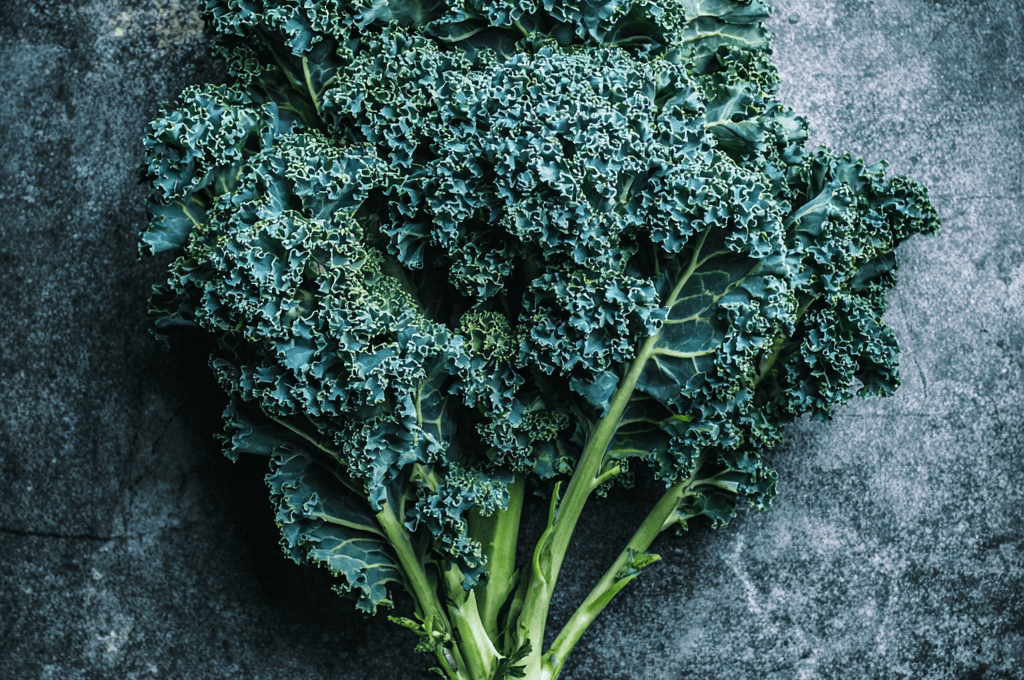
| Color | Deep blue-green with dense curls |
| Aroma | Fresh green, slightly nutty when cooked |
Chef Tip: Starbor’s dense curls catch vinaigrettes beautifully. Dress early and let rest for 2–3 minutes to soften the leaf without losing crunch.
🍽 Best Culinary Applications
Because of its uniform curl and compact leaf size, Starbor is favored for applications that require clean presentation and consistent texture. It handles strong flavors extremely well and stands up to both raw and cooked methods.
| Technique | Culinary Benefit |
|---|---|
| Raw winter salads | Curls trap dressing evenly; holds structure |
| Warm, wilted salads | Softens quickly while retaining body |
| Roasting | Creates crispable edges and rich flavor |
| Sauté with aromatics | Uniform leaf size = even cooking |
| Kale chips | Dense curls produce consistent crispness |
Flavor Pairings: lemon-tahini, toasted sesame oil, garlic confit, smoked salt, maple-roasted squash, pancetta, shallot vinaigrette, shaved Parmigiano, tahini-yogurt dressing, chili-garlic crisp.
Technique Note: Starbor wilts more evenly than Winterbor. For warm salads, sauté just 20–30 seconds with aromatics before finishing with vinegar or citrus.
🌿 Growing Starbor in Cool Climates
Starbor was bred for commercial growers who need predictable sizing, high yields, and uniformity. It thrives in cool climates such as the Pacific Northwest and performs exceptionally in both fall and winter production. Its compact growth habit allows for tight spacing, reducing field footprint while maintaining productivity.
Soil, Fertility & Climate Preferences
| Condition | Recommendation |
|---|---|
| Botanical | Brassica oleracea var. sabellica |
| Soil pH | 6.2–6.8 for optimal sugar and mineral balance |
| Nitrogen | Apply moderately; excess creates loose curls |
| Climate | High cold tolerance; excellent overwintering variety |
| Spacing | Closer spacing acceptable due to compact habit |
Grower Note: For the tightest curls and brightest color, reduce nitrogen in late-season plantings and let cold temperatures do the finishing work.
Timing & Harvest Strategy
Starbor is flexible, but its best flavor and texture develop in fall and winter. Its uniform plant size makes it easy for growers to plan predictable harvest cycles.
| Season | Strategy | Outcome |
|---|---|---|
| Spring | Transplant early; harvest small | Tender, mild leaves ideal for raw salads |
| Summer | Provide consistent water & moderate fertility | Good yield, lighter curls |
| Fall / Winter | Plant mid-summer for frost harvest | Peak sweetness, tightest curls, best structure |
Chef’s Harvest Guide:
6–9 inch leaves for raw dishes; 10–14 inches for roasting or sauté. Stems soften with cooking but should be trimmed for raw applications.
❄️ Frost, Sugar Conversion & Curl Quality
Starbor builds sweetness and curl density in the cold. Frost triggers both biochemical and structural improvements: starch converts to sugars, cell walls tighten, and leaves darken into deep winter greens.
| Cold Effect | Leaf Response | Culinary Benefit |
|---|---|---|
| Sugar accumulation | Sweeter leaves; reduced raw bitterness | Makes salads naturally balanced |
| Curl tightening | More compact frills | Better texture for roasted and sautéed dishes |
| Color intensification | Blue-green pigment deepens | Improved presentation on light plates |
Technique Tip: For roasted kale, leave stems intact. They caramelize slightly and balance the crisp curls with sweetness.
🐛 Pest & Companion Planting
Starbor’s dense growth habit helps reduce insect access, but companion planting improves resilience and flavor development.
| Practice | Value |
|---|---|
| Companions: rosemary, sage, garlic, onion | Repels pests and enhances aromatic terroir |
| Avoid brassica-heavy rotations | Reduces aphid buildup from radish and mustard |
| Low-nitrogen cover crops | Supports soil health without diluting curl density |
| Remove row cover after frost begins | Encourages tighter curls and sweeter flavor |
⭐ Why Starbor Belongs in Chef Gardens
Starbor is curly kale at its most refined: compact, uniform, sweetened by frost, and exceptionally versatile. It is a grower’s dream for consistent yields and a chef’s ally for reliable texture across raw, warm, and cooked techniques. With beautiful curls, winter sweetness, and excellent structure, Starbor earns its place in winter kitchens and market gardens alike.
Grow it for reliability. Harvest it through frost. Use its curls to create volume, texture, and natural beauty on the plate. Starbor is curly kale built for winter flavor and culinary precision.