Please note that some of the links on this website are affiliate links. I will earn a commission if you decide to make a purchase after clicking through the link. As an Amazon Associate I earn from qualifying purchases.
Darkibor: Deep-Green Curly Kale with Exceptional Winter Structure
Best Chef Recipes — Pacific Northwest Ingredient Series
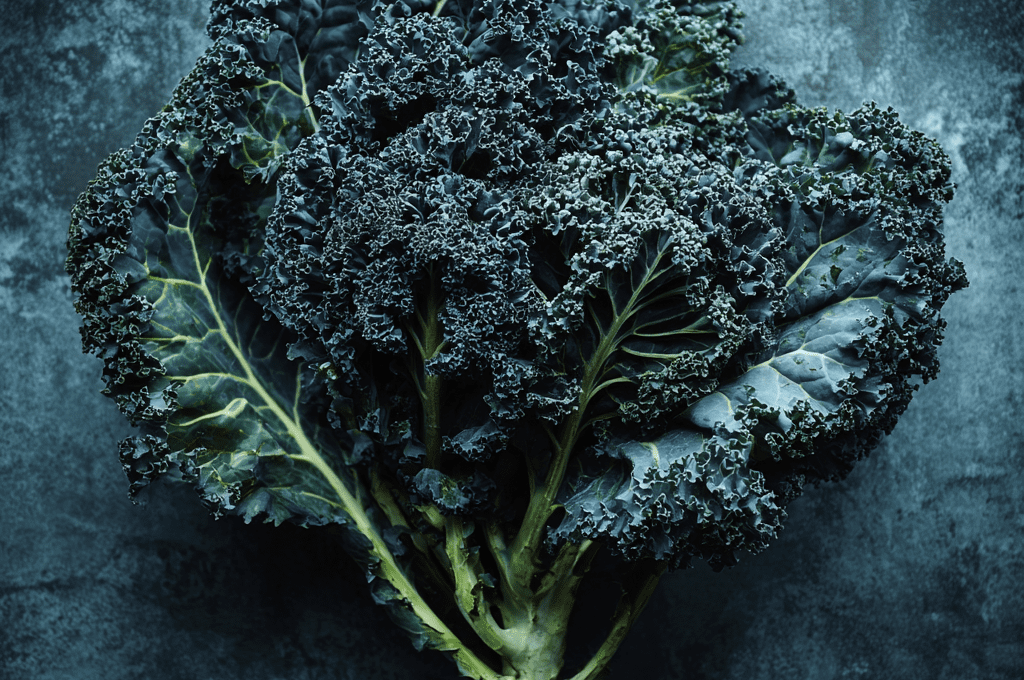
Darkibor is one of the most visually striking curly kales, known for its deep blue-green pigmentation, dense leaf curls, and compact yet productive growth habit. While it shares lineage with commercial curly cultivars such as Winterbor and Starbor, Darkibor distinguishes itself with richer coloration, firmer leaf architecture, and a more dramatic plate presence. For chefs seeking dark, highly structured greens for winter dishes, Darkibor is a standout performer.
In the field, Darkibor is cold-tolerant, resilient, and capable of producing uniform harvests throughout the fall and winter months. In the kitchen, its thick curls and slight minerality make it ideal for robust dressings, roasted applications, and sautés. Its darker pigment holds well after cooking, maintaining visual contrast on light-colored plates and providing depth to seasonal winter compositions.
🌱 Flavor, Texture & Visual Identity
Darkibor offers a bold visual profile with compact frills and deeply saturated color — a trait that becomes even more pronounced in cold weather. Its flavor leans slightly more mineral-forward than Starbor, but frost dramatically softens the brassica edge and enhances sweetness. The tighter curls create a satisfying raw crunch and a hearty texture when cooked.
| Feature | Description |
|---|---|
| Texture | Highly frilled, structured curls; firm raw, tender cooked |
| Sweetness | Moderate; improves significantly after frost |
| Bitterness | Slight mineral note raw; minimal after cold exposure |
| Color | Intensely dark blue-green pigment |
| Aroma | Earthy, clean, slightly nutty when sautéed |
Chef Tip: Darkibor’s darker color masks bruising better than lighter curly types — making it excellent for mise en place and advance prep in busy service kitchens.
🍽 Best Culinary Applications
Darkibor’s strength lies in its ability to retain structure and color across diverse techniques. The curls maintain body when marinated, sautéed, or roasted, and their shape creates natural depth and volume in plated dishes. The variety excels in preparations that benefit from textural contrast.
| Technique | Culinary Benefit |
|---|---|
| Raw salads | Dark curls hold vinaigrette and resist wilting |
| Warm salads | Wilts evenly while maintaining texture |
| Roasting or high-heat applications | Edges crisp beautifully; color remains rich |
| Sauté with garlic or smoked fats | Develops nutty, savory depth |
| Braising | Holds form longer than other curly types |
Flavor Pairings: roasted delicata squash, black garlic, lemon zest, pecorino, harissa oil, pancetta, brown butter, toasted walnuts, cider reduction, sesame-chili crisp.
Technique Note: For the deepest color retention, avoid blanching. Cook directly in fat or roast to preserve Darkibor’s natural pigment.
🌿 Growing Darkibor in Cool Climates
Darkibor is a robust cultivar bred for consistent production and cold-season market reliability. It thrives in the Pacific Northwest due to its tolerance for short days, frequent rainfall, and extended frost exposure. Growers value Darkibor for its compact habit, uniform leaf size, and dense curls that develop beautifully as temperatures drop.
Soil, Climate & Fertility Profile
| Condition | Recommendation |
|---|---|
| Botanical | Brassica oleracea var. sabellica |
| Soil pH | 6.2–6.8; promotes darker pigmentation |
| Organic matter | Moderate; too rich can lighten leaf color |
| Nitrogen | Balanced; high N reduces curl density |
| Climate | Excellent performance in frost, rain, and low light |
Grower Note: For the darkest pigmentation, plant for fall harvest. Darkibor’s color intensifies dramatically after consecutive frosts.
Timing & Harvesting Strategy
Darkibor grows well from spring through winter but reaches its peak quality as a fall–winter crop. Its compact habit allows efficient spacing and high yields per square foot.
| Season | Strategy | Outcome |
|---|---|---|
| Spring | Early planting; harvest small for tenderness | Lighter color; soft curls |
| Summer | Provide shade during heat spikes | Good growth; moderate curl density |
| Fall / Winter | Plant mid-summer for frost enhancement | Deep color, tight curls, peak sweetness |
Chef’s Harvest Guide:
6–9 inch leaves for raw preparations; 10–14+ inches for sauté, roasting, and braising. Stems are firmer than Starbor and best trimmed for raw service.
❄️ Frost Response & Color Development
Darkibor responds exceptionally well to cold, with frost enhancing both flavor and appearance. The darker pigment is linked to increased chlorophyll and cold-induced anthocyanin expression, giving the leaves a striking winter coloration.
| Cold Effect | Leaf Response | Culinary Benefit |
|---|---|---|
| Increased sugar concentration | Sweeter flavor, reduced bitterness | Improved raw eating quality |
| Curl tightening | More defined leaf edges | Superior texture in salads and sautés |
| Pigment intensification | Deep blue-green color develops | Striking visual contrast on the plate |
Technique Tip: When roasting, do not overcrowd — Darkibor’s curls crisp best with ample airflow.
🐛 Pest & Companion Planting
Like other curly kales, Darkibor benefits from natural pest suppression in cold seasons. Strategic companion planting can further reduce early-season pressure and enhance soil quality.
| Practice | Value |
|---|---|
| Companions: garlic, sage, thyme, fennel | Repels pests and enhances aromatic terroir |
| Avoid mustard-family rotations | Prevents flea beetle population buildup |
| Clover or vetch cover crops | Improves soil without overstimulating leaf growth |
| Late-season frost exposure | Enhances pigment and curl density |
🌑 Why Darkibor Belongs in Chef Gardens
Darkibor is a curly kale built for culinary refinement. Its saturated color, dense curls, and cold-enhanced sweetness create a winter ingredient that is both striking and delicious. For chefs, it offers exceptional structure for salads, sautés, and roasted preparations. For growers, it provides uniformity, resilience, and beauty in the coldest months.
Use it where color matters, where texture matters, and where winter greens must shine on the plate. Darkibor delivers depth, structure, and flavor — a true standout in the winter brassica palette.