Please note that some of the links on this website are affiliate links. I will earn a commission if you decide to make a purchase after clicking through the link. As an Amazon Associate I earn from qualifying purchases.
Blue Curled Vates: The Compact, Uniform, Cold-Hardy Kale for Winter Production
Best Chef Recipes — Pacific Northwest Ingredient Series
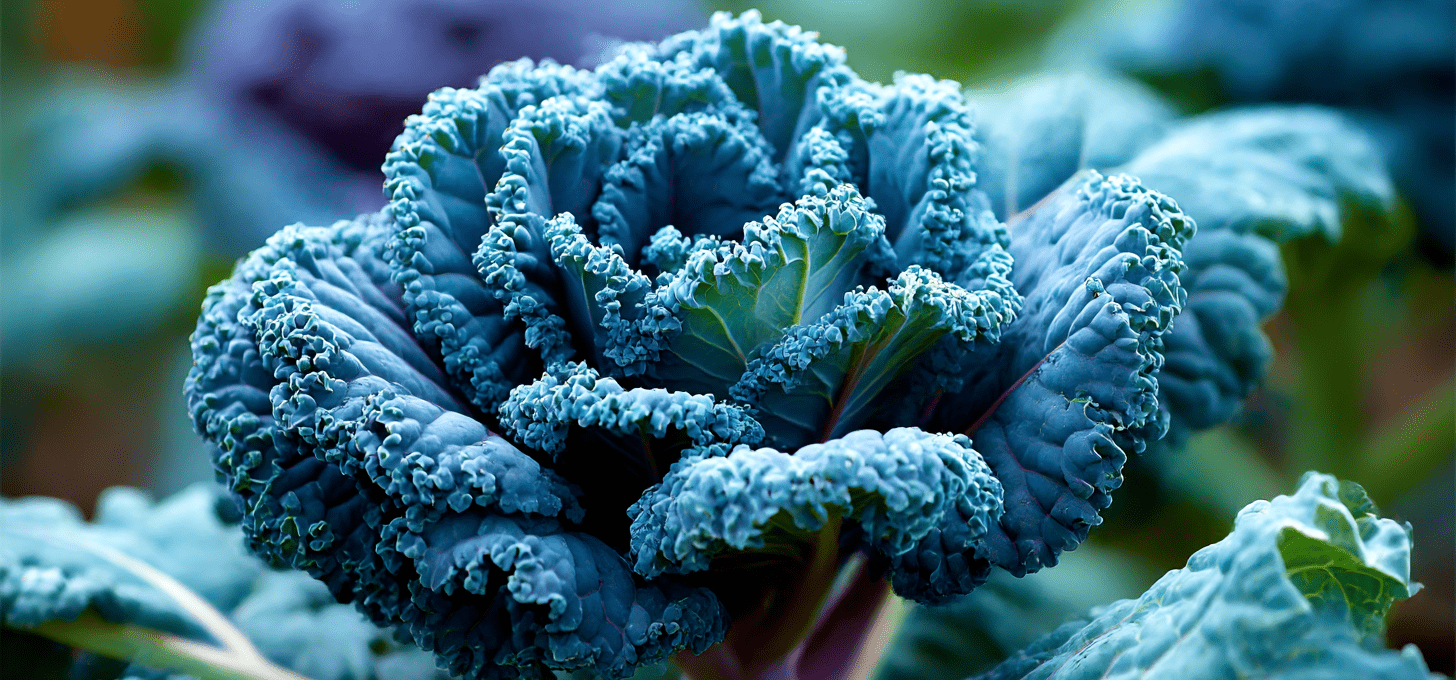
Blue Curled Vates is one of the most widely grown compact curly kales in North America, originally selected for uniformity, cold tolerance, and efficient field production. This variety combines tight blue-green curls, a short stem habit, and excellent frost resilience—making it ideal for small-scale chefs’ gardens, market farms, raised beds, and high-density plantings.
In the kitchen, its leaves are slightly more tender than larger curly varieties such as Winterbor or Westland Winter, yet still maintain structure through roasting, sautéing, or braising. For growers, Blue Curled Vates offers predictable growth, excellent yields per square foot, and the ability to harvest continuously through fall and winter in the Pacific Northwest.
🌱 Flavor, Texture & Visual Character
Blue Curled Vates is defined by its compact rosette shape and fine curls. The leaves develop richer blue-green pigmentation as temperatures drop, and the flavor responds accordingly—sweetening after frost, reducing bitterness, and gaining a subtle nutty note when cooked.
| Feature | Description |
|---|---|
| Texture | Fine curls; tender raw; holds structure in cooking |
| Sweetness | Moderate raw; increases considerably with frost |
| Bitterness | Low; very mild after winter exposure |
| Color | Blue-green, intensifying in cold weather |
| Aroma | Clean vegetal note with light nuttiness when sautéed |
Chef Tip: Because Vates is more compact, harvest leaves regularly to maintain tenderness, especially for raw preparations.
🍽 Best Culinary Applications
Blue Curled Vates’ smaller leaf size and tender curls make it ideal for techniques that require fast cooking or delicate texture. It also excels in raw applications when harvested young, and its curls capture dressings exceptionally well.
| Technique | Culinary Benefit |
|---|---|
| Winter salads | Tender curls hold vinaigrette without becoming tough |
| Quick sautés | Softens rapidly; retains bright flavor |
| Roasting | Fine curls crisp evenly at high heat |
| Soup finishing | Retains structure after brief simmering |
| Baby leaf harvest | Exceptional for raw dishes when young |
Flavor Pairings: lemon and garlic, white miso, Parmesan, chili oil, bacon lardons, roasted squash, tahini, cider vinegar, maple vinaigrette, smoked paprika.
Technique Note: Because Vates leaves cook quickly, add them near the end of sautés or soups to preserve color and texture.
🌿 Growing Blue Curled Vates in the PNW
Compact growth is the hallmark of Vates. Its short internodes reduce the likelihood of wind damage and keep plants close to the ground, where they resist cold stress better than tall-stemmed kales. This trait also makes it ideal for small gardens, hoop houses, interplanting, and winter CSA production.
Soil & Climate Recommendations
| Condition | Recommendation |
|---|---|
| Botanical | Brassica oleracea var. sabellica |
| Soil pH | 6.2–6.8 for frost-enhanced sweetness |
| Organic matter | Moderate; avoid excessive nitrogen |
| Nitrogen | Light, consistent feeding; too much reduces curl density |
| Climate | Thrives in frost, rain, and low light |
Grower Note: Vates maintains leaf quali