Please note that some of the links on this website are affiliate links. I will earn a commission if you decide to make a purchase after clicking through the link. As an Amazon Associate I earn from qualifying purchases.
Scarlet: The Vibrant Ruby-Purple Curly Kale with Exceptional Winter Sweetness
Best Chef Recipes — Pacific Northwest Ingredient Series
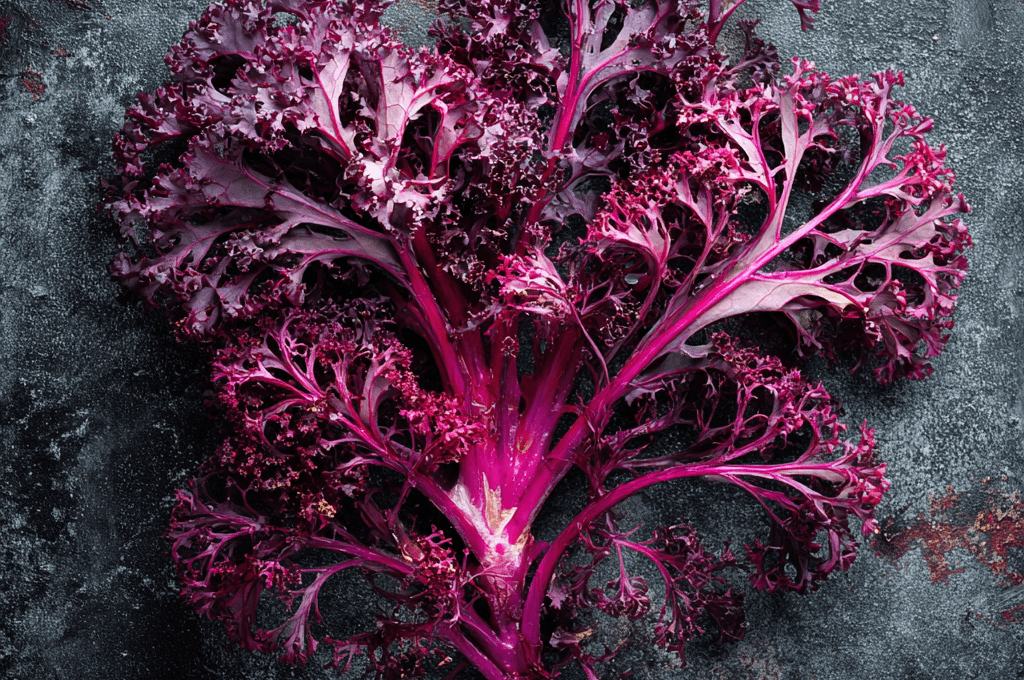
Scarlet kale is one of the brightest and most vivid winter kales available, known for its ruby-magenta frills, fine feathered curls, and delicate texture compared to its darker cousin, Redbor. While Redbor deepens toward a black-purple tonality, Scarlet maintains a luminous magenta-to-fuchsia hue even in the coldest months, making it visually striking in salads, garnishes, and warm preparations that benefit from natural color contrast.
Scarlet delivers a mild, sweet flavor enhanced by frost exposure and offers exceptional plate presence. Chefs value it for raw applications where color matters, while growers appreciate its cold tolerance, uniform growth, and consistent leaf production throughout winter in the Pacific Northwest.
🌱 Flavor, Texture & Color Expression
Scarlet kale expresses a unique combination of fine curls, tender leaves, and anthocyanin-rich pigmentation. Unlike darker purple cultivars, Scarlet retains a brighter hue—especially when exposed to acidic dressings—which makes it ideal for fresh preparations.
| Feature | Description |
|---|---|
| Texture | Fine, feathered curls; delicate raw; softens rapidly |
| Sweetness | Moderate; increases significantly after frost |
| Bitterness | Low; gentle earthy notes |
| Color | Bright scarlet-magenta with winter enhancement |
| Aroma | Clean, mild brassica |
Chef Tip: Toss Scarlet lightly with acidic vinaigrettes—citrus or vinegar brightens pigments and enhances its fuchsia glow.
🍽 Best Culinary Applications
Scarlet is best used in preparations where its color can shine. It is slightly more tender than Redbor and better suited to quick cooking or raw dishes.
| Technique | Culinary Benefit |
|---|---|
| Raw winter salads | Bright color; fine curls capture dressing |
| Quick sautés | Softens instantly; retains magenta tones |
| Kale chips | Crisps evenly; vibrant color remains visible |
| Garnishes | Excellent for high-end plating |
| Juicing / blending | Adds color and mild sweetness |
Flavor Pairings: blood orange, pomegranate seeds, toasted hazelnuts, sherry vinegar, maple, ginger, tahini, goat cheese, chili crisp.
Technique Note: Scarlet bruises easily; avoid over-massaging when preparing raw salads.
🌿 Growing Scarlet Kale in the PNW
Scarlet thrives in the Pacific Northwest’s maritime winters, where cool temperatures stabilize anthocyanins and bring out its brightest color. It tolerates wet weather, frost, and intermittent cold snaps, producing consistent harvests even in January and February.
Soil, Climate & Fertility Profile
| Condition | Recommendation |
|---|---|
| Botanical | Brassica oleracea var. sabellica |
| Soil pH | 6.2–6.8 for pigment expression |
| Organic Matter | Moderate; supports color stability |
| Nitrogen | Balanced applications; avoid excess |
| Climate | Performs exceptionally in cool, moist winters |
Grower Note: Scarlet grown in warm conditions produces duller color—its pigmentation is a true cold-weather expression.
Planting & Harvest Strategy
| Season | Strategy | Outcome |
|---|---|---|
| Spring | Harvest baby leaves | Mild, delicate, lighter color |
| Summer | Provide shade and consistent water | Healthy growth but duller pigmentation |
| Fall / Winter | Plant mid-summer for frost harvest | Brightest magenta color; sweetest flavor |
Chef’s Harvest Guide:
4–7 inch leaves for raw dishes; 8–12 inch leaves for sautéing, chips, and warm salads.
❄️ Cold Response & Anthocyanin Chemistry
Scarlet exhibits a classic anthocyanin response similar to Redbor but with brighter hue retention and faster color development. Cold exposure increases the concentration of water-soluble pigments, deepening magenta tones and enhancing leaf firmness.
| Cold Effect | Leaf Response | Culinary Benefit |
|---|---|---|
| Anthocyanin increase | Bright fuchsia-to-scarlet leaves | Striking visual contrast for raw plates |
| Sugar formation | Clean, sweet winter flavor | Ideal for salads and quick sautés |
| Improved curl definition | Finer, feathery frills | Excellent crisping and texture capture |
Technique Tip: Add a citrus splash at plating to make Scarlet “glow” on the dish.
💗 Why Scarlet Kale Belongs in Chef Gardens
Scarlet kale delivers what few greens can: natural, brilliant winter color combined with tender texture and sweet, clean flavor. It is ideal for modern plating, raw dishes, and quick warm applications where color retention matters. Growers benefit from its reliability and cold-season productivity; chefs benefit from a visually striking ingredient that elevates winter cuisine.
Use Scarlet where brightness is needed—winter salads, garnishes, warm vegetable medleys, or fine-dining presentations that rely on natural pigment contrast. It is a cornerstone ingredient for chefs seeking both beauty and authenticity in winter greens.