Please note that some of the links on this website are affiliate links. I will earn a commission if you decide to make a purchase after clicking through the link. As an Amazon Associate I earn from qualifying purchases.
Cavolo Nero: True Tuscan Heirloom Kale
Best Chef Recipes — Pacific Northwest Ingredient Series
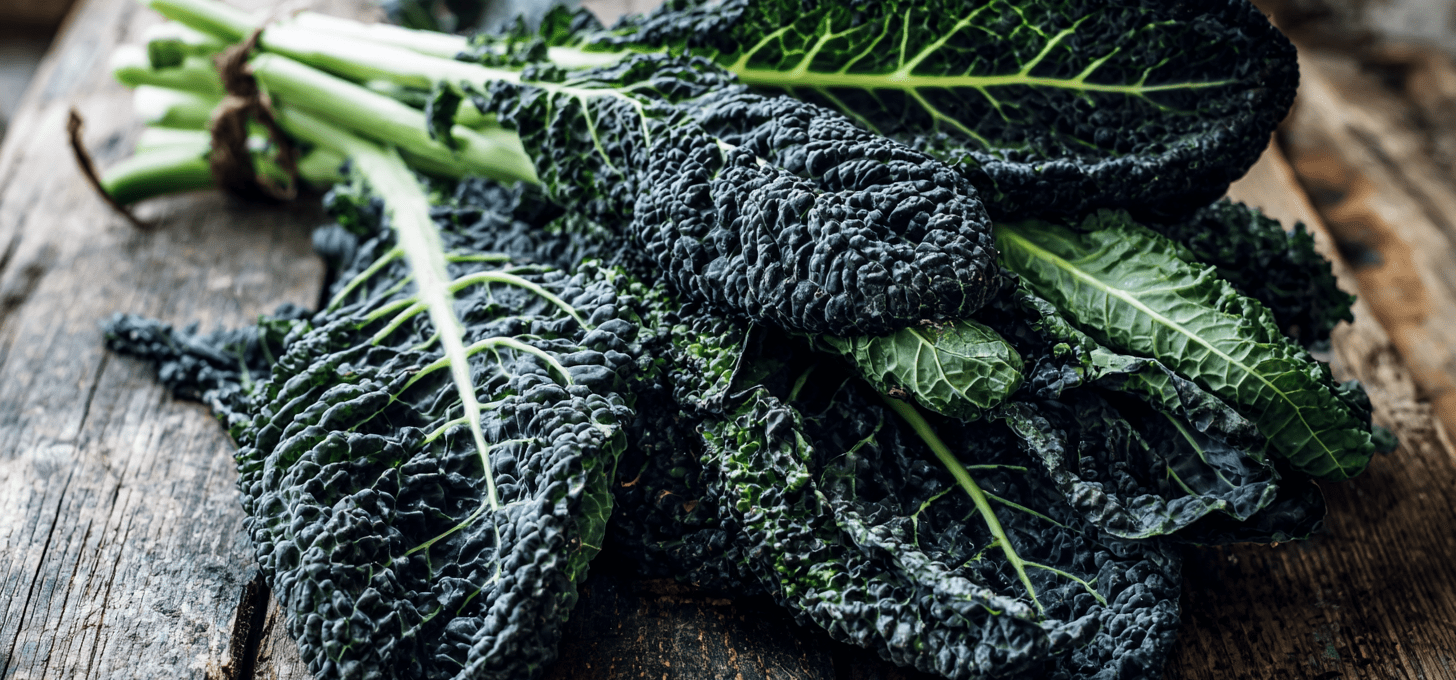
Cavolo Nero is the original Tuscan kale, the heirloom strain behind Italy’s rustic ribollita, minestrone nero, and countless winter stews. Its name literally means “black cabbage,” a nod to its dark, almost bluish-green leaves that hold up to long simmering without collapsing. While Americans use “Lacinato” as a catch-all term for palm-leaf kale, Cavolo Nero is the traditional culinary form passed down through Tuscan seed lines. In flavor, it is slightly sweeter, less bitter, and more supple than common hybrid Lacinato cultivars.
What sets Cavolo Nero apart is not just its shape or color, but its response to season and technique. Its leaves behave differently depending on climate stress, harvest timing, and whether it is cooked with water, smoke, or fat. For chefs, this is a leafy green with regional identity and a history written into its growth patterns. For gardeners, it is a winter crop that becomes better—not worse—as the weather cools.
🥬 Flavor & Culinary Character
Cavolo Nero offers a flavor profile that bridges richness and cleanliness. Younger leaves lean slightly sweet and leafy, whereas mature frost-touched leaves develop mineral depth and savory strength that can support legumes, pancetta, game meats, or aged cheese. Unlike commodity kale, this variety is not “neutral filler.” On the plate, it is meant to be tasted, not hidden.
| Feature | Description |
|---|---|
| Texture | Supple when young; becomes silky and toothsome after cooking |
| Bitterness | Low; mellow brassica notes even before frost |
| Sweetness | Moderate raw; intensifies with cold and long cooking |
| Color | Dark, matte green with less blistering than hybrid Lacinato |
| Aroma | Savory and vegetal with subtle earth and iron minerality |
Chef Tip: Cavolo Nero has less bitterness than typical Lacinato. For crudo, skip salting ahead; salt just before plating to preserve sweetness and avoid water loss.
🍽 Best Uses in the Kitchen
This heirloom kale thrives in dishes that ask for concentration—heat, broth, fat, and time. It can be ribboned raw, blistered on the grill, simmered in broth for hours, or pounded into pesto-style condiments with garlic, lemon, and aged cheese.
| Technique | Why It Excels |
|---|---|
| Slow simmering | Maintains structure in bean or meat-based stews; intensifies flavor |
| Charred whole leaves | Smoke accentuates mineral depth; finish with lemon or vinegar |
| Cavolo “pesto” | Blanched leaves pureed with nuts & cheese create a winter salsa verde |
| Crudo ribbons | Sweeter than Lacinato when raw; dress lightly to showcase delicacy |
| Oil-stewed greens | Olive oil infusion creates velvety textures & preserves flavor |
Pairing Intelligence: Cannellini beans, pancetta, rosemary, wild boar, fennel sausage, Parmigiano-Reggiano, lemon zest, Calabrian chile, anchovy, pecorino, and robust olive oil.
Technique Note: For ribollita or thick minestrone, cook stems 10 minutes longer than leaves. Slice stems thinly and add early; save leaves for the final simmer.
🌱 Growing Cavolo Nero for Flavor
Cavolo Nero thrives where winters are real. Like wine grapes or radicchio, it needs seasonal struggle to achieve complexity. While it can grow in spring and summer, fall and winter crops deliver the true heirloom flavor. Excess fertility or warm temperatures mute its subtle mineral tones.
Soil, Nutrition & Climate
| Condition | Guideline |
|---|---|
| Botanical | Brassica oleracea var. palmifolia |
| Soil pH | 6.3–6.8 for balanced mineral uptake |
| Fertility | Moderate; avoid nitrogen push which dilutes sweetness |
| Soil texture | Well-drained loam; raised beds improve winter resilience |
| Climate | Cold-tolerant; ideal for Pacific Northwest and coastal temperate zones |
Grower Note: Choose heirloom seed sources (Italian lineage or PNW cold-selected strains) for fuller flavor. Modern hybrids labeled “Lacinato” can be less complex.
Timing & Harvest Strategy
Cavolo Nero can be grown year-round, but the finest leaves come from plants harvested after multiple frost cycles. Early summer plantings for fall harvest are ideal for high-end culinary use.
| Season | Sow Window | Best Use |
|---|---|---|
| Spring | Late winter indoors; transplant early spring | Tender raw applications; pick small leaves |
| Fall / Winter | Start mid-summer | Sweet, mineral flavor for braising, stews, and grilling |
| Overwintering | Plant late summer | Deepest flavor; structure remains even in heavy frost |
Chef’s Harvest Guide: 6–10 inch leaves for crudo; 12–18 inch leaves for braising, grilling, or oil-stewing.
❄️ Frost, Flavor & Heirloom Identity
Cavolo Nero’s most distinctive trait is how it interprets cold. Unlike commodity greens that toughen, Cavolo softens and sweetens. Frost increases sugar concentration and strengthens the leaf’s internal structure, making it ideal for prolonged cooking.
| Cold Reaction | Impact on Cooking |
|---|---|
| Starches convert to sugars | Sweetness emerges in raw and braised applications |
| Cell walls strengthen | Leaves stay intact in broth or tomato-based stews |
| Mineral aromatics intensify | Pairs exceptionally with legumes, pork, and aged cheese |
Technique Tip: To extract maximum flavor, add Cavolo Nero twice in long-cooked dishes—stems early, leaves in the final 15–20 minutes. This mirrors traditional Tuscan timing.
🐛 Pest & Companion Plant Strategy
Cavolo Nero resists winter pests well, but early-season plantings still benefit from companion support. Aim to deter aphids and enhance soil stability without overfeeding.
| Strategy | Reason |
|---|---|
| Companions: rosemary, sage, onions, marigolds | Repel pests and increase ecological diversity |
| Avoid: radish, mustard | Act as insect attractors, especially for aphids |
| Use winter row cover only early | Remove after frost to encourage sweetness |
| Seed from heirloom sources | Flavor-first genetics produce better culinary results |
🌿 Why Cavolo Nero Belongs in Culinary Gardens
True Cavolo Nero is not simply another kale. It is an heirloom vegetable with a cultural and seasonal identity. It tastes of winter sunlight, mineral-rich soils, and the slow patience of cold nights. For chefs, it offers a flavor narrative that can anchor dishes to time and place. For gardeners, it rewards restraint, timing, and good seed selection.
In the kitchen, Cavolo Nero can support bold flavors without being overwhelmed, making it ideal for Italian, Mediterranean, and wood-fire cooking. In the garden, it continues to produce through frost, snow, and short winter days, becoming sweeter with each hardship. It is a leafy example of how adversity builds character—on the plate and in the soil.
If you grow or source only one kale for serious cooking, choose Cavolo Nero. Grow it for winter. Cook it with patience. Let the season speak through its leaves.