Please note that some of the links on this website are affiliate links. I will earn a commission if you decide to make a purchase after clicking through the link. As an Amazon Associate I earn from qualifying purchases.
Improved Siberian Kale: The Reliable Workhorse of the Winter Garden
Best Chef Recipes — Pacific Northwest Ingredient Series
Improved Siberian kale is one of the most dependable winter greens available to gardeners and cooks in cold and maritime climates. Bred from traditional Siberian kale lines (Brassica napus), this variety was selected for larger leaves, improved vigor, and milder flavor while retaining exceptional cold tolerance.
It is not flashy or ornamental. Instead, Improved Siberian earns its place through consistency, productivity, and ease of use—qualities that make it especially valuable in both home kitchens and professional winter menus.
🧪 Botanical Identity & Breeding Purpose
Unlike Lacinato or curly kales, Improved Siberian belongs to the Brassica napus species group, placing it closer to rutabaga and Russian kales than to cabbages. This lineage gives it softer leaves, tender stems, and rapid regrowth.
The “Improved” designation reflects selective breeding focused on:
- Larger, more uniform leaves
- Higher yields over long harvest windows
- Reduced bitterness
- Improved disease resistance
| Trait | Description |
|---|---|
| Botanical | Brassica napus (Improved Siberian) |
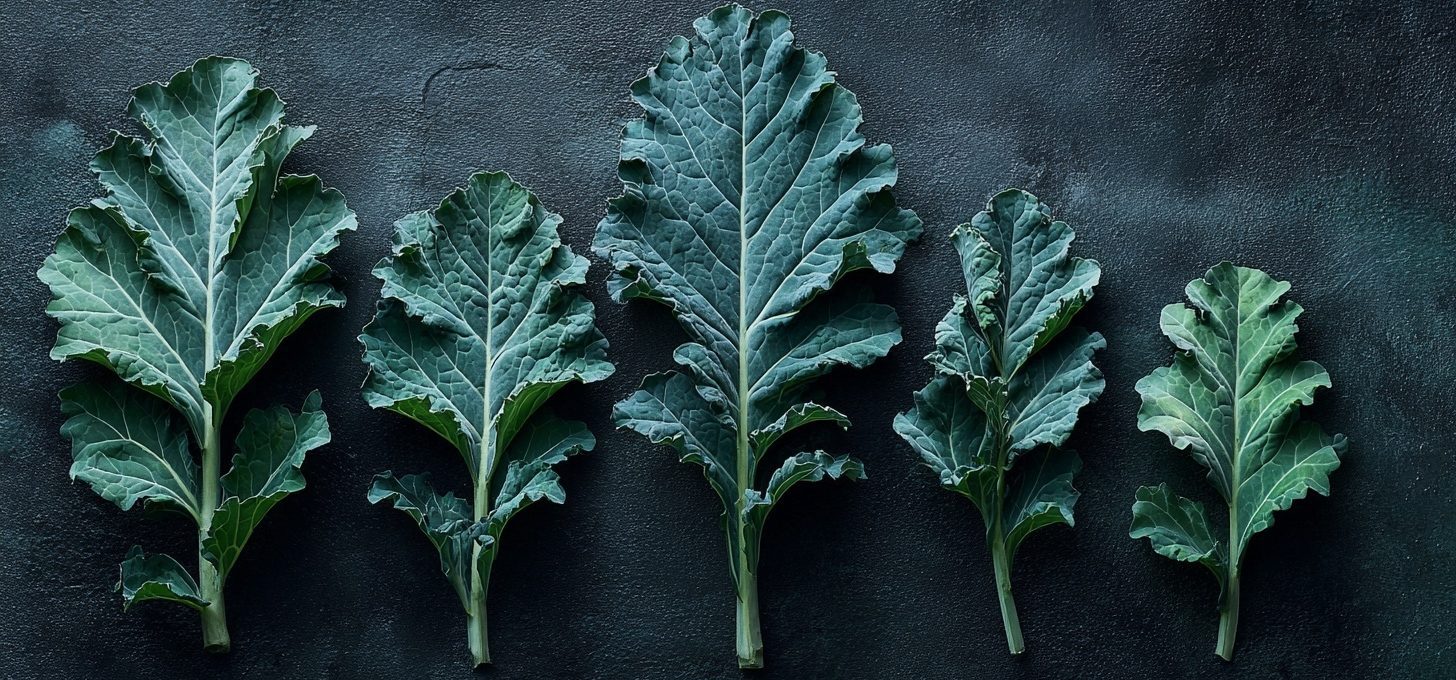
| Leaf Shape | Flat to lightly ruffled, broad |
| Color | Medium green to blue-green |
| Cold Tolerance | Excellent; thrives in frost |
| Growth Habit | Open, fast-regrowing, high-yield |
🥬 Flavor & Texture Profile
Improved Siberian kale is prized for its mildness. The leaves are noticeably more tender than most curly kales and less fibrous than mature Lacinato, making it approachable for raw and lightly cooked preparations.
- Flavor: Mild, lightly sweet, clean
- Texture: Soft leaves, tender stems
- Bitterness: Very low, especially after frost
- Best stage: Baby to mid-size leaves
Chef insight: This is one of the easiest kales to serve raw without aggressive massaging or long cooking.
🍽 Culinary Uses & Kitchen Applications
Improved Siberian kale excels in everyday cooking. It wilts quickly, absorbs seasoning well, and integrates easily into mixed dishes without dominating them.
- Raw salads — thin-sliced with simple vinaigrette
- Quick sautés — garlic, oil, and a splash of stock
- Soups & stews — added late for tenderness
- Stir-fries — flexible leaves hold sauce well
- Fermentation — mild flavor works well in kraut blends
Flavor pairings: lemon, apple cider vinegar, onion, garlic, mustard, beans, potatoes, grains, eggs.
🌿 Growing Improved Siberian in the Pacific Northwest
This kale was effectively made for PNW conditions. It tolerates cool, wet soils, uneven sunlight, and repeated harvesting with minimal decline in quality.
It is especially well suited to:
- Fall planting for winter harvest
- Early spring sowing
- High-yield family gardens
- Cut-and-come-again systems
| Condition | Recommendation |
|---|---|
| Soil pH | 6.0–7.5 |
| Light | Full sun to partial shade |
| Water | Moderate; consistent moisture preferred |
| Cold | Excellent frost and cold tolerance |
| Harvest Style | Outer leaves, continuous harvest |
❄️ Why Improved Siberian Is a Winter Staple
Improved Siberian kale lacks the drama of ornamental varieties, but it delivers something more valuable: reliability. It grows when conditions are marginal, tastes good without manipulation, and integrates seamlessly into winter cooking.
For chefs, it is a dependable green for soups, grains, and everyday plates. For home gardeners, it provides steady harvests with minimal effort. In a seasonal kitchen, Improved Siberian is not a feature—it is a foundation.