Please note that some of the links on this website are affiliate links. I will earn a commission if you decide to make a purchase after clicking through the link. As an Amazon Associate I earn from qualifying purchases.
Lacinato Rainbow: Color-Forward Tuscan Kale with Cold-Hardy Sweetness
Best Chef Recipes — Pacific Northwest Ingredient Series
Lacinato Rainbow is a visually striking cross between classic Tuscan Lacinato and Russian-type kale, bred for color, winter hardiness, and exceptional texture. Its leaves combine the elongated, palm-like form of Lacinato with the pink and purple pigmentation of cold-hardy Russian strains. The result is a kale that is both highly ornamental and deeply flavorful — a cultivar equally suited to chefs, market growers, and garden enthusiasts who appreciate edible beauty.
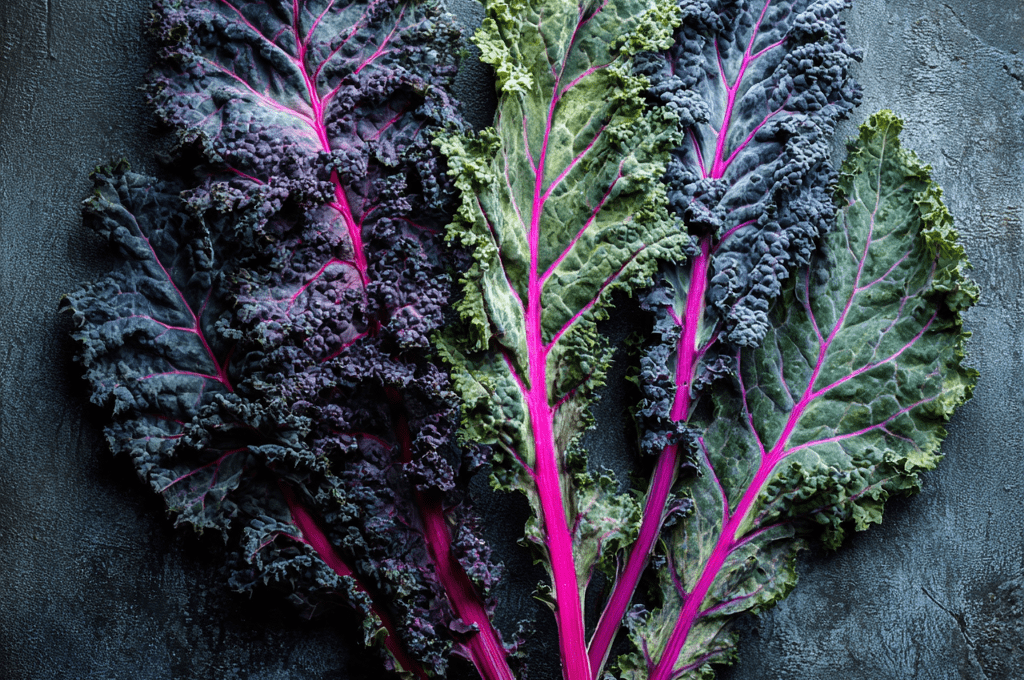
In appearance, Lacinato Rainbow is dramatic: blue-green leaves streaked with rose, lavender, or deep magenta midribs. In flavor, it offers the tenderness of Russian kale with the savory structure of Lacinato. And in the field, it is more cold-resistant than standard Tuscan varieties, thriving in frost and even light snow. This is kale built for winter, built for flavor, and built for color-forward plating.
🌱 Flavor, Texture & Visual Character
Lacinato Rainbow’s flavor is immediately recognizable — a hybrid of mineral depth and soft sweetness. Raw, it has a tender bite with mild brassica intensity, making it ideal for salads and crudo preparations. After frost, the leaves become noticeably sweeter and the midribs deepen in color, creating a striking visual contrast.
| Feature | Description |
|---|---|
| Texture | Tender like Russian kale but with Lacinato’s structure; pliant ribs |
| Sweetness | High after frost; mild raw; excellent for salads |
| Bitterness | Low; softens quickly with lemon or salt |
| Color | Blue-green leaves with pink, purple, or coral ribs |
| Aroma | Mild brassica with faint herbaceous notes |
Chef Tip: Use the vibrant stems as a visual accent. Slice thinly and scatter over dishes for natural color contrast without artificial plating elements.
🍽 Culinary Uses
This variety is designed for versatility. Its tenderness lends itself to raw dishes, while its structure allows it to hold up in cooking methods typical of Tuscan kale. Because the stems are unusually flavorful and attractive, chefs often use them intentionally rather than discarding them.
| Technique | Culinary Benefit |
|---|---|
| Raw crudo ribbons | Tender enough to eat raw; stems add color contrast |
| Warm salads | Wilts easily without losing visual brightness |
| Light braising | Becomes silky quickly; less cooking time than Lacinato |
| Whole-leaf sauté | Keeps color variation intact; great with garlic and lemon |
| Pickled stems | Pink stems make vivid garnishes; tangy crunch |
Flavor Pairings: lemon juice, Calabrian chile, aged pecorino, roasted squash, apple cider vinegar, brown butter, smoked salt, anchovy oil, pancetta, tahini, pomegranate arils.
Technique Note: For maximum color, sauté leaves quickly with high heat and finish with acid after cooking to preserve pigmentation.
🌿 Growing Lacinato Rainbow in Cool Climates
Lacinato Rainbow’s parentage gives it remarkable cold tolerance. The Russian lineage improves survivability and sweetness in frost, while the Lacinato heritage provides height, upright form, and robust leaf structure.
Soil & Fertility Requirements
| Condition | Guideline |
|---|---|
| Botanical | Cross of Brassica oleracea and Brassica napus traits |
| Soil pH | 6.2–6.8 for optimal pigment expression |
| Organic Matter | Moderate; avoid high nitrogen to prevent pale stems |
| Climate | Extremely cold-hardy; thrives in PNW fall/winter |
Grower Note: For the most vibrant rib colors, grow plants slowly through fall and harvest after repeated frost exposure.
Planting, Timing & Harvesting
Lacinato Rainbow adapts well to succession planting but truly excels as a winter crop. Its hybrid vigor ensures steady growth through cool weather and beautiful pigmentation as night temperatures drop.
| Season | Strategy | Outcome |
|---|---|---|
| Spring | Transplant early; harvest young | Tender greens; lighter stem color |
| Summer | Shade if heat exceeds 85°F | Good growth but less pigmentation |
| Fall / Winter | Plant mid-summer; harvest post-frost | Best sweetness, color, and culinary performance |
Chef’s Harvest Guide:
6–10 inch leaves for raw use; 10–14 inches for braising and sauté. Larger leaves retain stem color exceptionally well.
❄️ Frost, Pigmentation & Flavor Development
Lacinato Rainbow’s beauty is not cosmetic — it is biochemical. The pink and purple rib colors come from anthocyanins, pigments that intensify when plants experience cold stress. The Russian parentage enhances both this coloration and the conversion of starches into sugars.
| Cold Reaction | Effect | Culinary Benefit |
|---|---|---|
| Anthocyanin increase | Ribs turn vivid pink, coral, or purple | Natural plating color contrast |
| Sugar conversion | Sweeter leaves, reduced bitterness | Ideal for raw salads and warm applications |
| Texture strengthening | Firmer leaf structure in frost | Holds shape during sauté or grilling |
Technique Tip: Serve raw leaves immediately after slicing — prolonged air exposure can dull stem color.
🐛 Pest & Companion Plant Strategy
Thanks to its hybrid vigor, Lacinato Rainbow resists damage better than many kale varieties, but companion planting can further improve leaf quality and flavor.
| Practice | Benefit |
|---|---|
| Companions: garlic, sage, rosemary, fennel | Repels pests and aids mineral uptake |
| Avoid brassica-dense rotations | Reduces aphid and flea beetle migration |
| Use low-nitrogen cover crops | Improves soil structure without excess growth |
| Remove row cover early in fall | Allows cold to enhance rib coloration |
🌈 Why Lacinato Rainbow Belongs in Chef Gardens
Lacinato Rainbow is kale with presence — visually expressive, culinarily flexible, and exceptionally cold-hardy. It combines the best traits of two iconic brassica types: the flavor and structure of Lacinato with the color and winter sweetness of Russian kale. For chefs who value seasonal storytelling and vibrant winter plating, this variety is unmatched.
Use it raw to showcase its tenderness and color. Wilt it lightly for silky textures. Highlight the stems as a natural garnish. Grow it through cold for peak flavor. Lacinato Rainbow proves that winter greens can be both beautiful and deeply flavorful — a perfect fit for modern Pacific Northwest cuisine.