Please note that some of the links on this website are affiliate links. I will earn a commission if you decide to make a purchase after clicking through the link. As an Amazon Associate I earn from qualifying purchases.
Winter Stews of the Pacific Northwest
Best Chef Recipes — Seasonal and Regional Culinary Studies
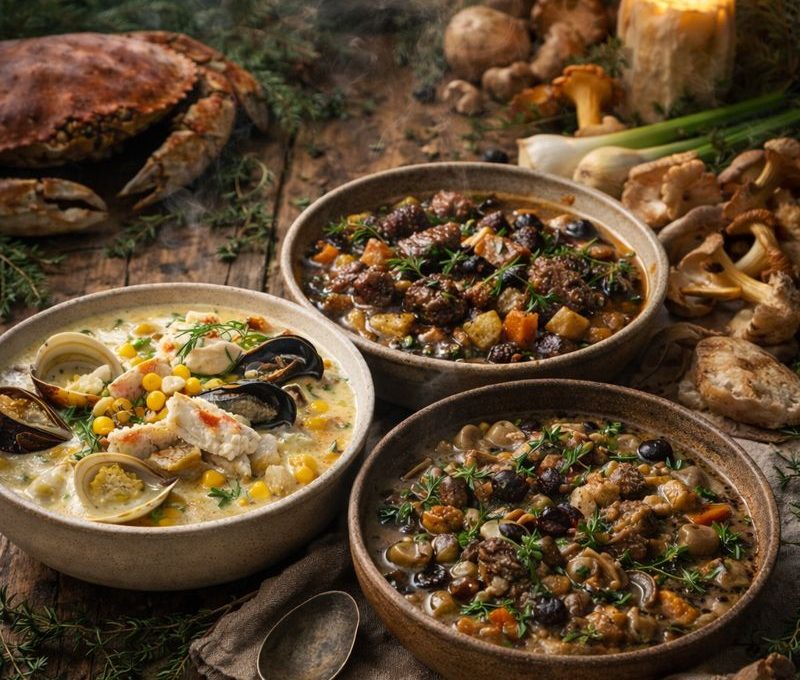
The stews presented here are conceived as both domestic preparations and restaurant-ready formulations, grounded in regional ingredients and winter-forward technique. Each reflects a specific dimension of Pacific Northwest terroir.
Coastal and Seafood-Centered Winter Stews
Seafood stews of the Pacific Northwest emphasize clarity and salinity, relying on clean stocks, shellfish liquor, white wine, and restrained aromatics to support the natural sweetness of coastal fish and shellfish.
- Dungeness Crab and Roasted Sweet Corn Winter Stew — Dungeness crab and late-season roasted corn in a creamy aromatic broth.
- Puget Sound Cod, Leek, and Yukon Gold Stew — Clean, composed, and structurally comforting.
- Clam, Fennel, and Saffron Coastal Stew — Aromatic and saline, informed by maritime tradition.
- Penn Cove Mussels in White Wine with Evergreen — Light broth emphasizing shellfish sweetness and resinous notes.
- Smoked Salmon, Potato, and Dill Cream Stew — A measured interplay of smoke, fat, and softness.
- Black Cod with Kelp, Ginger, and Winter Greens — Fat-rich fish structured by umami and vegetal freshness.
- Halibut, Celeriac, and Mustard Cream Stew — Earth-driven roots paired with restrained white fish.
- Oyster, Bacon, and Potato PNW Chowder-Style Stew — Structured richness with clear regional identity.
- Steelhead Trout and Wild Mushroom Stew — River and forest meeting in one pot.
- Rockfish, Tomato, and Bay Leaf Fisherman’s Stew — Rustic, adaptable, and tomato-forward.
Forest, Field, and Land-Based Stews
Land-based winter stews in the Pacific Northwest favor long, gentle cooking and collagen-rich cuts, supported by roots, restrained herbs, and acidity drawn from wine, cider, or preserved fruit.
- Venison, Juniper, and Root Vegetable Stew — Lean game softened through aromatics and slow heat.
- Red Wine–Braised Beef Shank with Winter Aromatics — Deep, collagen-rich, and built for extended cooking.
- Lamb, Turnip, and Rosemary Stew — Herb-forward and moderately robust.
- Duck Leg, White Bean, and Thyme Stew — Confited richness balanced by legumes.
- Pork Shoulder, Apple, and Savoy Cabbage Stew — Fat, acidity, and sweetness in equilibrium.
Vegetable and Woodland-Focused Stews
Vegetable-forward winter stews rely on layered foundations—sweated aromatics, toasted grains or legumes, and broths reinforced with mushrooms, herbs, and controlled acidity.
- Wild Mushroom, Barley, and Onion Stew — Earth-driven with sustained savory depth.
- Winter Squash, Leek, and Toasted Hazelnut Stew — Sweetness moderated by nutty bitterness.
- Celeriac, Potato, and Whole-Grain Mustard Stew — Root-centric with gentle acidity.
- Kale, White Bean, and Smoked Paprika Winter Stew — Substantial without heaviness.
- Roasted Root Vegetables in Herb-Infused Broth — Clean, adaptable, and seasonally grounded.
Why Stew Defines the Pacific Northwest Winter Table
Pacific Northwest winter stews prioritize clarity over excess. They rely on broth rather than thickness, aromatics rather than aggressive spice, and restraint rather than intensity. Seafood remains delicate. Vegetables retain structure. Meats soften without losing identity.
These stews are not designed to overwhelm. They are designed to sustain—reflecting a regional food culture shaped by water, forest, and long, wet winters.
Whether served in a professional kitchen or prepared quietly at home, stew remains one of the most direct and honest expressions of Pacific Northwest winter cooking.